
Can You Have Cataract Surgery After LASIK? What to Know Before You Need It

MBBS, M.S. in Ophthalmology | 25+ years of Experience
MBBS, M.S. in Ophthalmology | 25+ years of Experience
Table of Contents
Key Takeaways
- Yes, you can have cataract surgery after LASIK.
- LASIK and cataract surgery treat different parts of the eye.
- LASIK reshapes the cornea, while cataract surgery removes the cloudy natural lens and replaces it with an artificial intraocular lens (IOL).
- Previous LASIK does not mean you will have a poor result from cataract surgery.
- Your previous LASIK is important when measuring the eye and calculating the appropriate IOL power.
- Old LASIK records can be helpful, but cataract surgery can still be planned without them.
- Your IOL choice depends on your current eye health, visual needs and expectations.
If you have had LASIK in the past and have now been told you have a cataract, you may naturally wonder, “Can you have cataract surgery after LASIK?”
Yes, you can.
Having LASIK does not prevent you from having cataract surgery later in life. Many people have LASIK when they are younger, enjoy years of good vision and then develop age-related changes in the natural lens much later.
What is important to understand is that LASIK and cataract surgery are two very different procedures. Knowing what each one does also explains why your previous LASIK becomes relevant when we plan cataract surgery.
LASIK and Cataract Surgery: What Is the Difference?
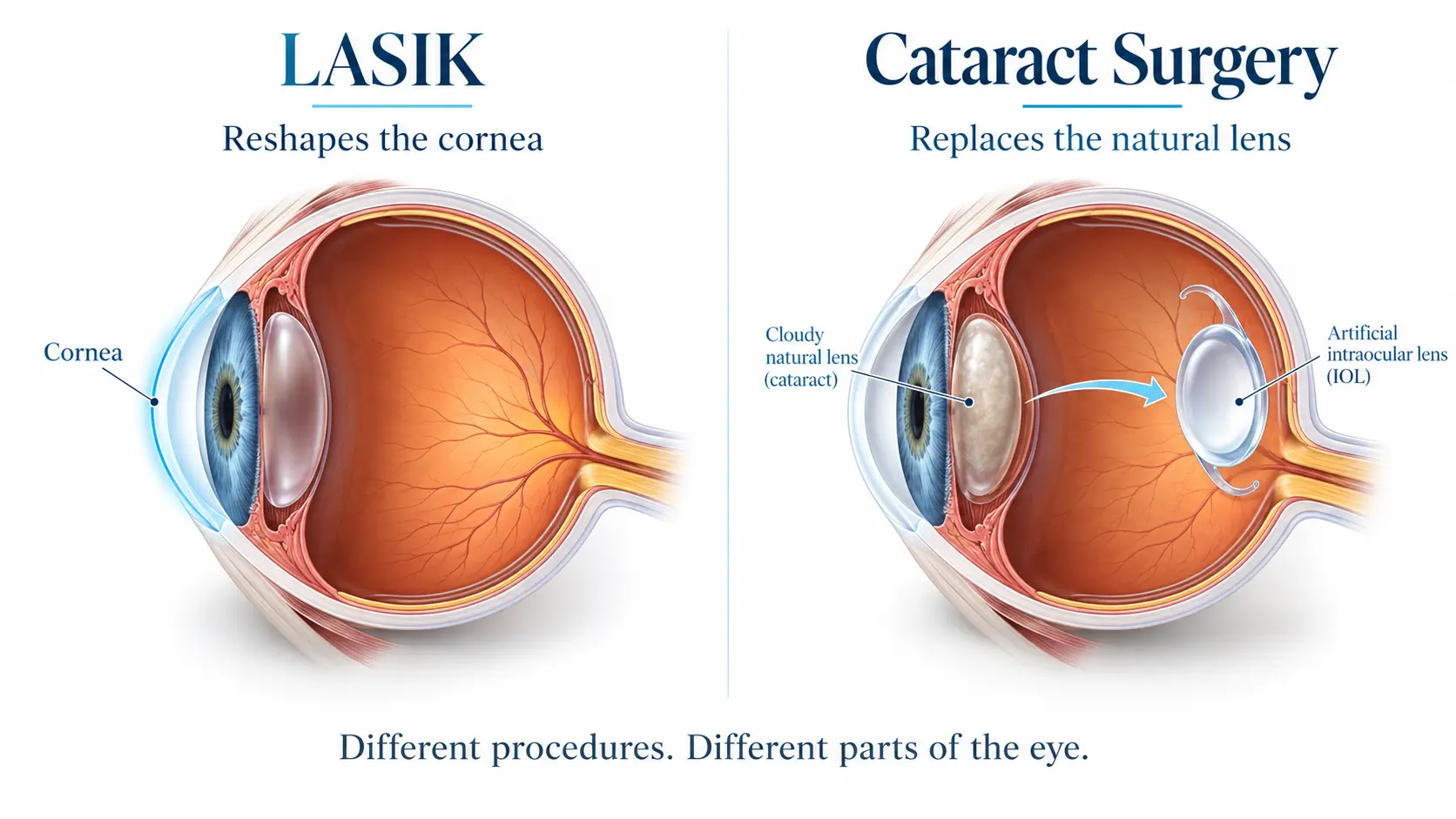
It is easy to think of LASIK and cataract surgery as similar because both can improve vision. In reality, they work on different structures and address different problems.
Let’s look at the science behind LASIK. LASIK reshapes the cornea, the clear surface at the front of the eye. It changes the way light enters the eye to correct refractive errors such as myopia, hyperopia or astigmatism.
Cataract surgery, on the other hand, treats the natural lens inside the eye. As we age, this lens can become cloudy and form a cataract. During surgery, the cloudy lens is removed and replaced with an artificial intraocular lens, or IOL.
So, in simple terms:
LASIK → reshapes the cornea
Cataract surgery → replaces the natural lens
Having had LASIK does not mean you have already had the procedure that treats a cataract. This is why it is entirely possible to have LASIK earlier in life and cataract surgery years later.
Why Might You Need Cataract Surgery After LASIK?
LASIK corrects the way your eye focuses light, but it does not stop the natural ageing process of the eye.
You may have had LASIK at the right age for LASIK surgery and enjoyed excellent distance vision for many years. Later, you might begin noticing blurred or cloudy vision, difficulty seeing at night, glare around lights, or changes in your vision that cannot be explained simply by your glasses prescription.
Sometimes patients assume their LASIK has “worn off.” That is not necessarily what is happening.
As we get older, the natural lens can gradually lose its clarity. If it becomes cloudy enough to interfere with your vision and daily activities, this may be a cataract.
In that situation, cataract surgery addresses the new problem in the natural lens. Your previous LASIK does not prevent you from being treated.
What Happens When You Have Surgery for Cataract After LASIK?
The basic cataract procedure remains the same. The cloudy natural lens is removed and replaced with an artificial IOL.
Where your previous LASIK becomes important is in the planning and lens calculation.
LASIK permanently changes the shape of the cornea. While these changes are intended to be long-lasting, it is helpful to understand what “permanent” means after LASIK, as this change in the cornea needs to be taken into account when we measure the eye and calculate the power of the IOL.
This does not mean there is something wrong with your cornea. It simply means we are working with a cornea that has already been surgically reshaped.
Modern diagnostic equipment and IOL calculation methods allow us to account for this when planning surgery.
Does the Type of LASIK You Had Matter?
It can.
We may want to know whether you previously had LASIK to correct myopia or hyperopia, how much correction you required and whether you subsequently had any enhancement procedure.
For example, myopic LASIK generally makes the central cornea flatter, while hyperopic treatment produces a different change in corneal shape. These differences can be relevant when calculating the appropriate IOL power.
This is why your old LASIK records can be useful.
If you have them, bring your previous prescriptions, surgical records or pre-LASIK measurements to your cataract consultation. They may provide additional information about how your eye was before treatment.
But if your LASIK was 15 or 20 years ago and you have no records at all, don’t assume that cataract surgery cannot be planned.
We can still examine the eye and use current measurements and appropriate post-LASIK calculation methods.
How Do We Choose the IOL After LASIK?
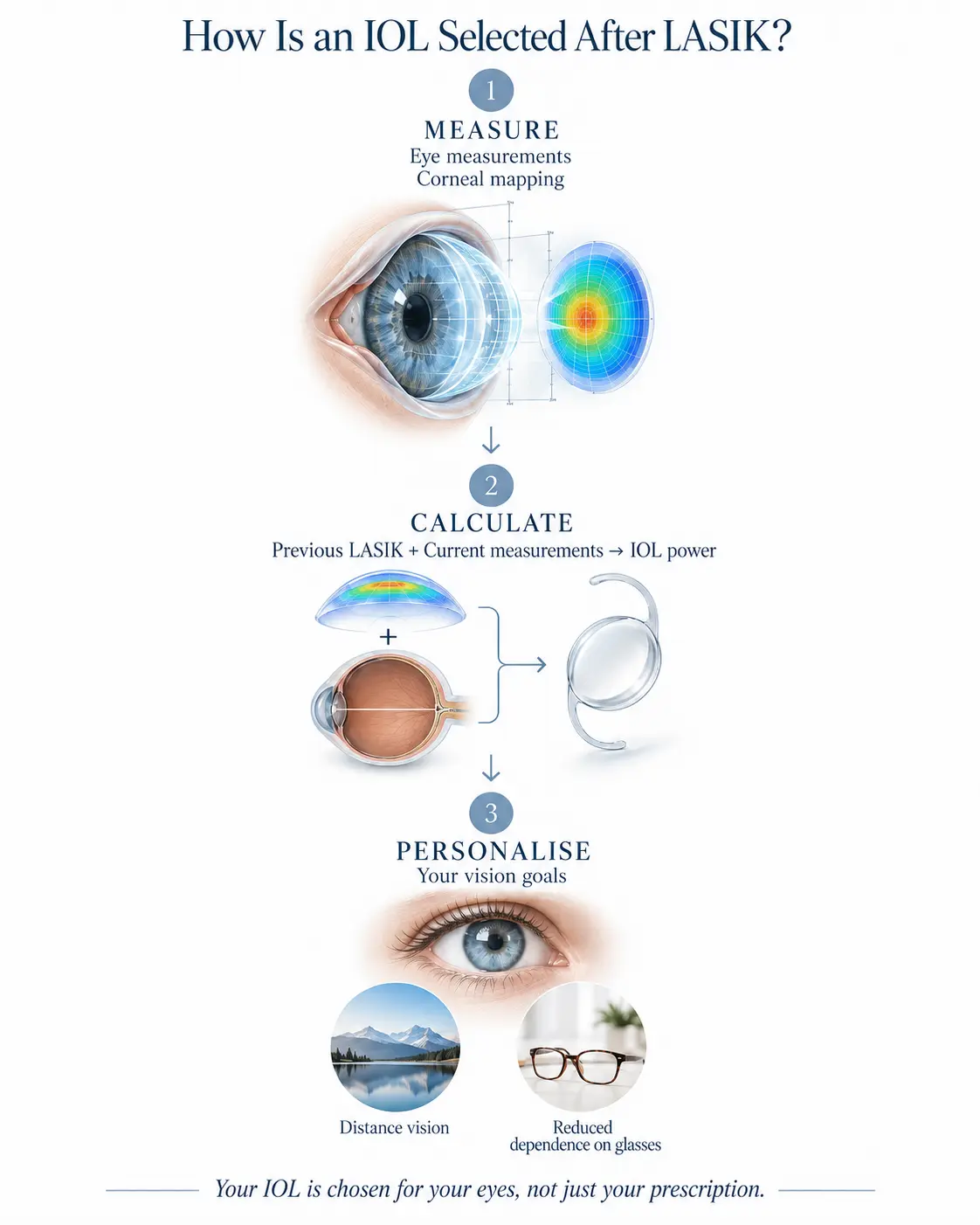
Choosing the right IOL is an important part of cataract surgery, and understanding the different types of cataract lenses can help you make an informed choice. Previous LASIK is another factor we consider when deciding which lens may be suitable for you.
We take detailed measurements of the eye before surgery. Depending on the individual patient, this may include optical biometry and corneal topography or tomography, along with other assessments of the eye.
We then use the available information to calculate an appropriate IOL power.
The goal is not simply to look at your current glasses prescription and choose a lens based on that number. Your previous LASIK, current corneal shape and overall eye health all form part of the picture.
We also consider what you want from your vision after surgery.
For example, someone who wants to reduce their dependence on glasses may have different IOL options from someone who is perfectly comfortable wearing reading glasses.
Can You Be Free of Glasses After Cataract Surgery?
This is one of the most common questions, particularly from people who previously enjoyed good vision without glasses after LASIK. If you are wondering can you have cataract surgery after lasik, and whether you can still be free from glasses afterwards, the answer depends on several factors.
Cataract surgery can reduce your dependence on glasses, but complete freedom from glasses cannot be guaranteed.
Different IOLs offer different visual outcomes. Some patients may be suitable for monofocal lenses, while others may be candidates for multifocal, trifocal or extended-depth-of-focus lenses.
There is no single lens that is right for everyone.
Your corneal condition, retina, ocular surface, eye health, lifestyle and visual expectations all matter when making this decision. A lens that works very well for one patient may not be the best choice for another.
So rather than choosing an IOL simply because it offers the greatest possible reduction in glasses, we look at whether it is appropriate for your eyes and what you actually need from your vision.
What If My Vision Changed After LASIK?
Having a change in vision years after LASIK does not automatically mean that your LASIK has failed.
Your eyes continue to change with age.
Presbyopia, for example, commonly develops with age and makes it harder to focus on nearby objects. Later, changes in the natural lens can lead to cataract formation.
You may therefore experience several different stages of vision change after LASIK.
You could initially have excellent distance vision after LASIK, later need reading glasses, and eventually develop a cataract.
These changes do not mean that LASIK has been reversed. They reflect the normal ageing of different parts of the eye.
Does Cataract Surgery Undo Your LASIK?
It does not. If you have had LASIK in the past, the changes made to your cornea remain even after cataract surgery.
What changes during cataract surgery is the natural lens inside your eye. The cloudy lens is removed and replaced with an artificial lens (IOL), while the cornea that was reshaped during LASIK is left as it is.
So, cataract surgery is not a repeat of LASIK, nor does it cancel out the correction you had previously. It simply addresses a different part of the eye when the natural lens has developed a cataract.
This distinction is also why your previous LASIK history is important when we plan your cataract surgery, but it does not prevent you from having the procedure.
Is Cataract Surgery After LASIK Riskier?
Having had LASIK does not automatically make cataract surgery unsafe.
The main additional consideration is often refractive predictability- how closely the final prescription of the eye matches the target planned before surgery.
IOL power calculations can be less predictable in eyes that have previously undergone corneal refractive surgery. This is why careful measurements, an understanding of your LASIK history and appropriate calculation methods are important.
It is also why we prefer to discuss expectations honestly before surgery rather than promise a particular visual result.
Your overall eye health matters too. The cornea, retina, optic nerve and ocular surface can all influence the final visual outcome.
What If You Don't Have Your Old LASIK Records?
Don’t panic.
Ideally, we would like to know about your eye before LASIK, including your original prescription and previous corneal measurements. These records can be particularly useful when planning the IOL.
But many patients simply do not have them.
Perhaps the surgery was performed many years ago, the clinic has closed, or the records were never kept. That does not mean you cannot undergo cataract surgery.
We can assess the eye as it is today and use current diagnostic measurements and post-LASIK calculation methods to help plan the IOL.
The most important thing is to tell your cataract surgeon that you have had LASIK, even if you cannot remember exactly when or where it was performed.
What Should You Tell Your Cataract Surgeon?
At your consultation, mention any previous laser vision correction you have had.
If you have your old records, bring them along. Useful information may include:
- Your prescription before LASIK
- Your prescription after LASIK
- Pre-LASIK corneal measurements
- Details of the LASIK procedure
- Any enhancement or additional laser treatment
- Previous surgical records
What Can You Expect From Cataract Surgery After LASIK?
If you have had LASIK, you can still have cataract surgery when you need it. So, can you have cataract surgery after lasik? Yes, but there are a few additional things we need to consider when planning the procedure.
Your previous LASIK changes the shape of the cornea, which can affect the measurements used to choose the right intraocular lens (IOL). This means your LASIK history is an important part of your cataract surgery planning.
The outcome will depend on more than your previous LASIK. Your current eye health, corneal condition, IOL choice, lifestyle and visual expectations all play a roles ole.
So, rather than simply asking whether cataract surgery is possible after LASIK, it is more useful to understand which IOL and surgical plan are appropriate for your eyes now.
That is something we can determine through a detailed eye examination, the right measurements and careful surgical planning.